Wednesday, July 14, 2010

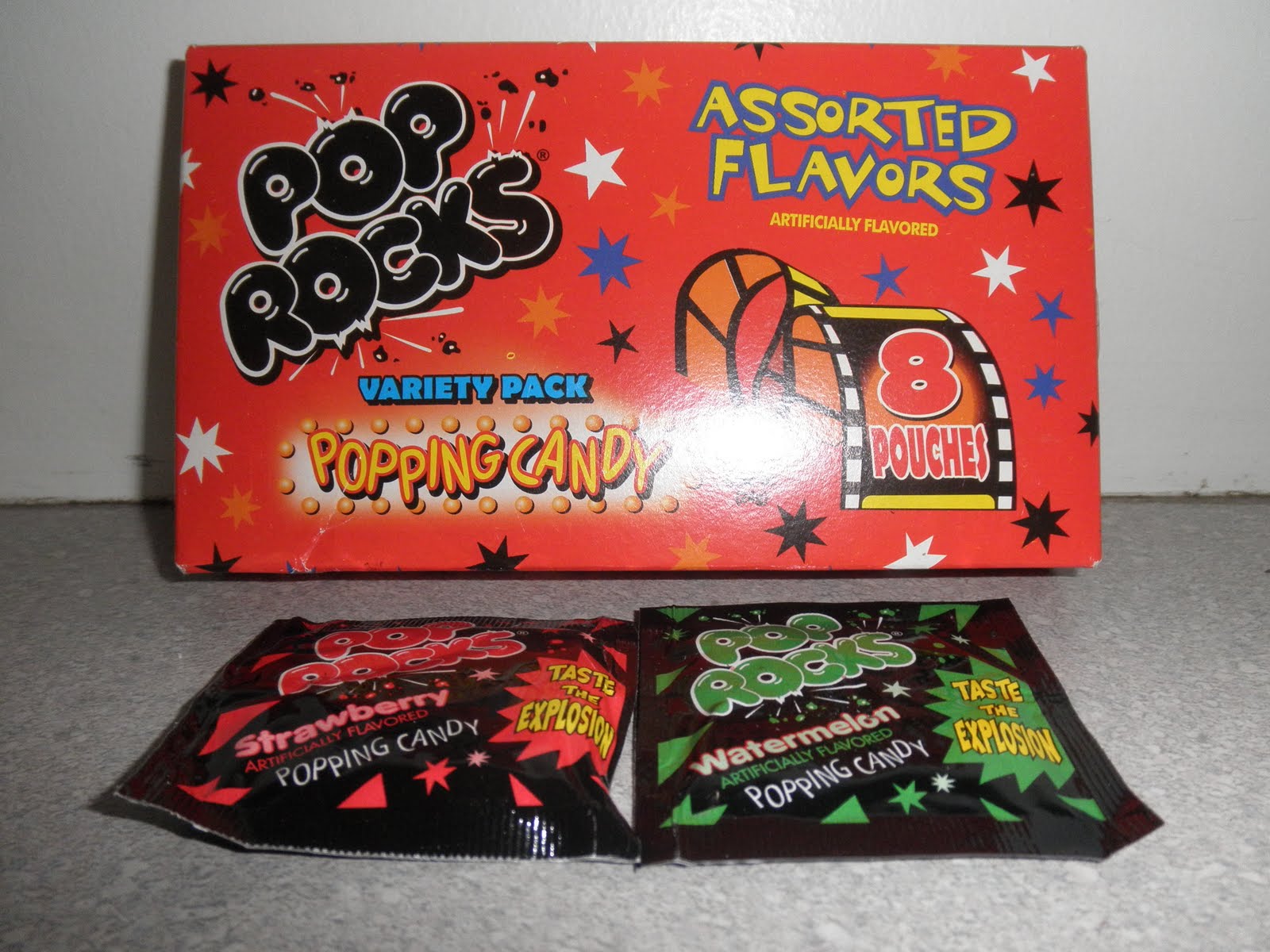
Pop Rocks

Supplies

Pop Rocks candy (The World Market)
water
pipettes/medicine dropper (available at pharmacies)
Zip Loc bag
Dixie cup

Concept: At the candy factory for Pop Rocks the candy is processed with the gas carbon dioxide. When your saliva or water (for Zip Loc/Dixie cup) dissolves the sugar in the candy the gas is released and pops!

Procedure: Have students pinch Pop Rocks into a Ziploc bag, add some drops of water, seal bag and observe. Next have children conduct same experiment, but place Pop Rocks in a Dixie cup. Compare both experiments. Does, sealing the Ziploc bag cause a different reaction? Lastly, have your students place Pop Rocks and mouth and discover how saliva affects Pop Rocks.

Extension: Use different liquids to dissolve Pop Rocks (vinegar, peroxide, soda, milk) and compare reactions.

Application to the Real World: Carbon Dioxide is used in the food, oil and chemical industry. Carbon Dioxide creates the carbonation in Soda. Dry Ice is also frozen carbon dioxide.


Taste Sensations

Supplies

1 box of Baker's unsweetened chocolate
1 package of Sour Patch Kids
granualated sugar
salt
Dixie cups

Concept/Procedure: Have the students learn the four tast sensations- bitter, sour, sweet, and salty. Have them eat unsweetened chocolate for bitter, sour patch kids for sour, sugar for sweet, and salt for salty.

Extension: Have them do the sample again, but this time plug their nose to learn how sense of smell is closely connected to our sense of taste.

Application to the Real World: Our sense of taste provides us with the ability to detect flavor. Bitterness is the most sensitive of tastes, it is often viewed as unpleasant and sharp. Sourness it the taste detecting acidity. Sweetness is the taste detecting sugar and is often viewed as pleasureable. Salty is the taste detecting the presence of sodium. In the 2000s, the fifth taste sensation of savory has been advised by many authorities within this field. Savoriness is the taste sensation produced by amino acides. It is described as having a "rich" taste. The Chinese Five Elements Philosophy lists the five basic tastes as bitter, salty, sour, sweet and spicy. Japenese culture also adds a sixth taste to the basic five.


Monday, July 12, 2010

Silly Putty

Supplies

2 parts school glue
1 part liquid starch (Target sells a non aerosal spray starch; remove sprayer to pour)
Ziploc bag

Procedure: In a Ziploc bag pour 1/4 cup of glue and 1/8 cup of starch. Seal Ziploc bag and massage with fingers for a few minutes.

Alternate Recipe

1 Tbsp. school glue
1 tsp. water
1 Tbsp Borax and water mixture
Ziploc bag

Procedure: Place 1 Tbsp. school glue and 1 tsp. of water in a Ziploc bag. Keep down at bottom of bag. Take 1 cup of warm water and place in an empty plastic bottle. Add 1 Tbsp. of Borax to plastic bottle and shake until all is disolved (use funnel to help pouring water and Borax). Add 1 Tbsp. of Borax/water solution to the Ziploc bag and massage with fingers for a few minutes.

Concept: Creating a polymer. An elastomer, is any of the elastic (returns to original shape after being deformed) polymers, which have the elastic properties of natural rubber.

Extension: Have students find an old newspaper and transfer the picture of a cartoon from the comic section onto the putty and enjoy distorting the cartoon's imaging by stretching the silly putty.

Application to the Real World: Silly Putty (Dow Corning patent 3179) was origninally created in 1943. Initial intentions were for industrial use as a sythetic (artificially made) rubber. It was unusable for this purpose, since it was not as firm as rubber. However, in 1949 an unemployed advertising executive thought would be good to market as a toy. He packaged it in plastic eggs and it has been an American toy ever since. Because of this polymer's or elastomer's natural flexibility, it can be stretched and absorb mechanical energy in a similar manner as rubber.


Sunday, July 11, 2010

Flubber

Supplies

1 1/2 cups glue
4 Tbsp.Borax (laundry detergent aisle)
4 cups water

Concept: Creating a polymer. A polymer is a large molecule (macromolecule) composed of repeating structural units typically connected by covalent (The number of electron pairs an atom can share with other atoms) chemical bonds.

Procedure: Mix 2 cups of water and the glue in a bowl. In a empty plastic bottle use a funnel to add 2 cups of warm water and 4 Tbsp. of Borax. Shake bottle till Borax is dissolved. After it's dissolved, pour the Borax mixture a little at a time into the glue mixture and stir. You may not need all of the Borax mixture.

Extension: Make other sensory substance like mud, playdough, slime, and silly putty and test each substance for bounce, stretch, and stickiness. Have students document results.

Application to the Real World: Polymers play an essential role in our daily life's. They range from sythetic plastics(synthetic rubber, Bakelite, neoprene, nylon, PVC, polystyrene, polyethylene, polypropylene, polyacrylonitrile, PVB, silicone), to natural bipolymers like DNA, nucleic and proteins. Natural polymers include cellulose, natural rubber, amber, and shellac.