Tuesday, August 3, 2010

Does Particle Size Matter?

Supplies

three Alka Seltzers (per student or group)
three clear cups
Zip Lock bags
stop watch/clock
measuring cup
wooden block or mug

Concept: Particle size does matter. The smaller the piece of Alka Seltzer; the faster the reaction time to dissolving. It takes longer for the larger piece to dissolve than the smaller or crushed piece.

Procedure: Fill a measuring cup with 1 cup of water. Place a whole Alka Seltzer in an empty clear plastic cup. Pour 1 cup of water into the clear plastic cup with the Alka Seltzer. Use a stop watch or clock to time how long it takes the Alka Seltzer to dissolve. Ask the students to look and listen. Next, break alka Seltzer into equal size parts (4 to 8 pieces) Pour 1 cup of water into 2nd clear plastic cup with pieces of Alka Seltzer and time seconds till particle is dissolved. Last, place whole Alka Selzer in bag and use block or bottom of mug to crush into a powder. Place powder in 3rd plastic cup and pour 1 measured cup of water and time seconds till dissolved.

Extension: Vary temperature of water (hot tap, warm tap, and cold/ice) and used thermometer to take temperature of water and repeat experiment. Stir the Alka Selzer and water to test if reaction time is faster or slower.

Application to Real World: Alka Seltzer is a antacid and pain reliever. A huge marketing strategy used for this medicine is its ability to provide fast relief to acid indigestion, upset stomach, heartburn with head ache/body aches. The Alka Seltzer tablet has a quicker reaction time in dissolving in comparison to many other medicines.


Saturday, July 17, 2010

Mentos and Diet Coke

Supplies

2-liter of Diet Coke
6 mentos
paper rolled into tube (big enough for Mentos)
index card or card stock square

Concept: Diet Coke and mentos have an explosive reaction when they are combined. The Diet Coke starts to make holes or pit the candy rapidly. This causes a gaseous reaction producing a fountain, rather than dissolving the candy.

Procedure: Place 2-liter of Diet Coke on a flat surface (outside). Open the 2-liter and place the index card or card stock over the top. Place the rolled paper tube above the index card/card stock and drop in 6 mentos. Slowly pull out the index card/card stock square and allow the mentos to drop into the liter.

Extension: Try using various 2-liters of diet soda and non diet soda and compare results. Use different kinds of mentos (mint vs fruit) to document comparasion. Add more or less mentos and record how the results vary. Also, vary how quickly or slowly the mentos are dropped into the soda.

Application to the Real World: The show MythBuster's feautured an episode on this experiment concluding the caffeine, potassium benzoate, aspartame, and CO2 gas in the Diet Coke combined with the gelatin and gum arabic in the Mentos create the eruptive fountain. MythBusters also theorized the physical structure of the Mentos as a vital component in the eruptive effect due to nucleation.


Wednesday, July 14, 2010

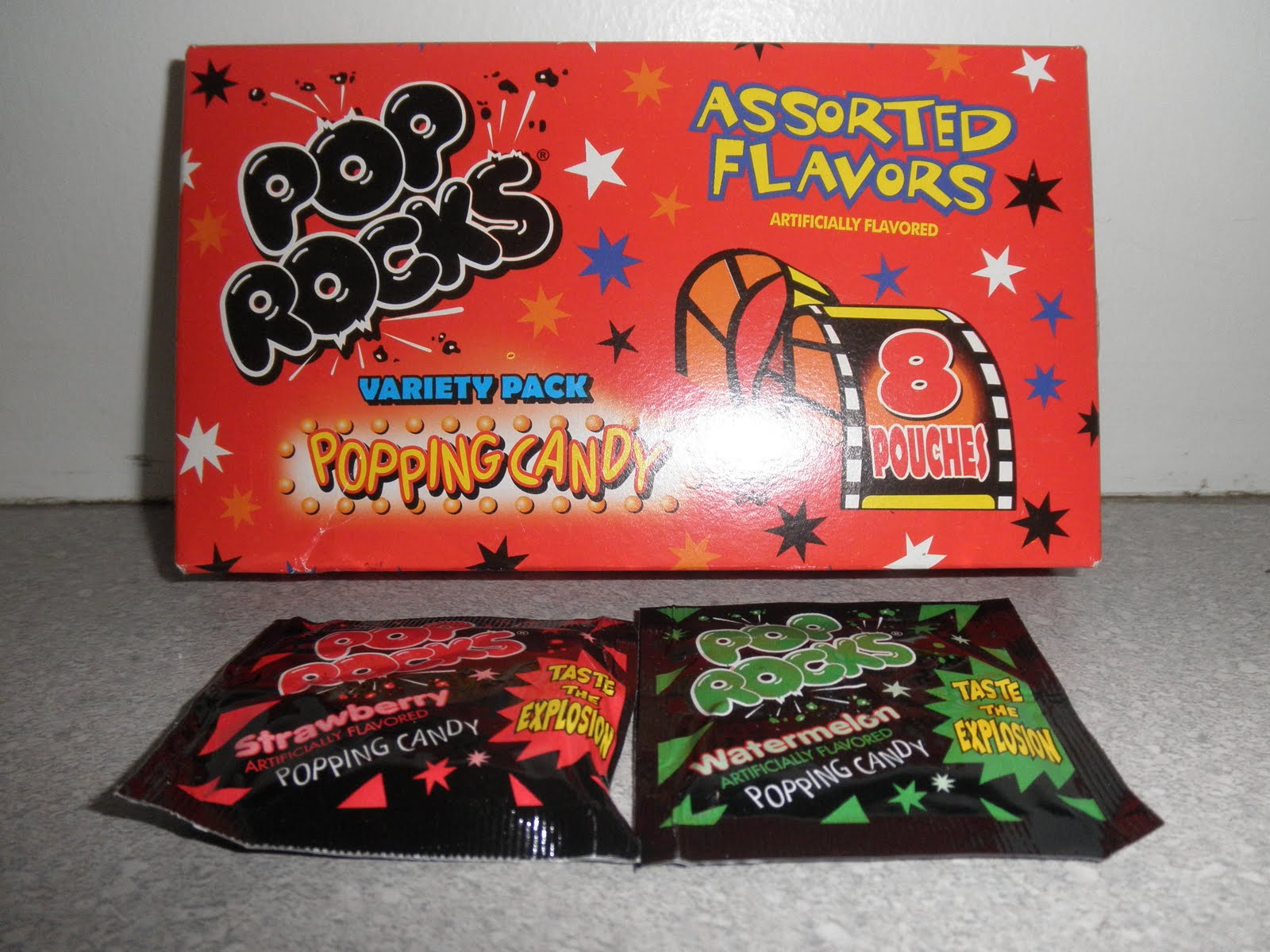
Pop Rocks

Supplies

Pop Rocks candy (The World Market)
water
pipettes/medicine dropper (available at pharmacies)
Zip Loc bag
Dixie cup

Concept: At the candy factory for Pop Rocks the candy is processed with the gas carbon dioxide. When your saliva or water (for Zip Loc/Dixie cup) dissolves the sugar in the candy the gas is released and pops!

Procedure: Have students pinch Pop Rocks into a Ziploc bag, add some drops of water, seal bag and observe. Next have children conduct same experiment, but place Pop Rocks in a Dixie cup. Compare both experiments. Does, sealing the Ziploc bag cause a different reaction? Lastly, have your students place Pop Rocks and mouth and discover how saliva affects Pop Rocks.

Extension: Use different liquids to dissolve Pop Rocks (vinegar, peroxide, soda, milk) and compare reactions.

Application to the Real World: Carbon Dioxide is used in the food, oil and chemical industry. Carbon Dioxide creates the carbonation in Soda. Dry Ice is also frozen carbon dioxide.


Taste Sensations

Supplies

1 box of Baker's unsweetened chocolate
1 package of Sour Patch Kids
granualated sugar
salt
Dixie cups

Concept/Procedure: Have the students learn the four tast sensations- bitter, sour, sweet, and salty. Have them eat unsweetened chocolate for bitter, sour patch kids for sour, sugar for sweet, and salt for salty.

Extension: Have them do the sample again, but this time plug their nose to learn how sense of smell is closely connected to our sense of taste.

Application to the Real World: Our sense of taste provides us with the ability to detect flavor. Bitterness is the most sensitive of tastes, it is often viewed as unpleasant and sharp. Sourness it the taste detecting acidity. Sweetness is the taste detecting sugar and is often viewed as pleasureable. Salty is the taste detecting the presence of sodium. In the 2000s, the fifth taste sensation of savory has been advised by many authorities within this field. Savoriness is the taste sensation produced by amino acides. It is described as having a "rich" taste. The Chinese Five Elements Philosophy lists the five basic tastes as bitter, salty, sour, sweet and spicy. Japenese culture also adds a sixth taste to the basic five.